With Modi’s mission of ‘Make in India’, India is ascending towards becoming a global semiconductor supplier. Japanese Giant Fujifilm is planning to set up a factory in Dholera, Gujarat, which will help the nation become self-reliant in chip manufacturing.
The Historic Announcement: Fujifilm’s Strategic Move
When Tetsuya Iwasaki, General Manager of Fujifilm’s Electronic Materials Business Division, confirmed that the Japanese Giant Fujifilm is planning to expand in Dholera, the semiconductor industry took notice. This manufacturing facility will support the semiconductor ecosystem by providing quality critical semiconductor materials for wafer processing, which is the foundation process in producing chips.
Fujifilm is one of the biggest global suppliers of semiconductors, supplying semiconductor materials to industry giants like GlobalFoundries and TSMC (Taiwan Semiconductor Manufacturing Company). Their decision to establish their factory in Dholera validates their trust and credibility in India’s ever-developing high-tech manufacturing sector.
Fujifilm’s Flexible Investment Model: 3 Types
Fujifilm is investing in India in a multi-faceted approach by considering three unique collaboration models:
- Direct Manufacturing: Fujifilm can establish and operate its own production facility. Here, Fujifilm will have operational control while transferring world-class manufacturing practices in India.
- Licensed Production: Here, Fujifilm will allow Indian companies to acquire a license and manufacture semiconductor materials. However, Fujifilm is supervising and maintaining the quality standards.
- Joint Ventures: Partner with established Indian semiconductor manufacturers for a powerful collaboration that benefits both parties while accelerating market entry.
This flexible strategy demonstrates Fujifilm’s commitment not just to profit, but to genuine technology transfer and capacity building-a philosophy that has been warmly received by Indian semiconductor companies, as Iwasaki himself noted at the Semicon India 2025 conference.
Why Fujifilm is Keen to Invest in Dholera?
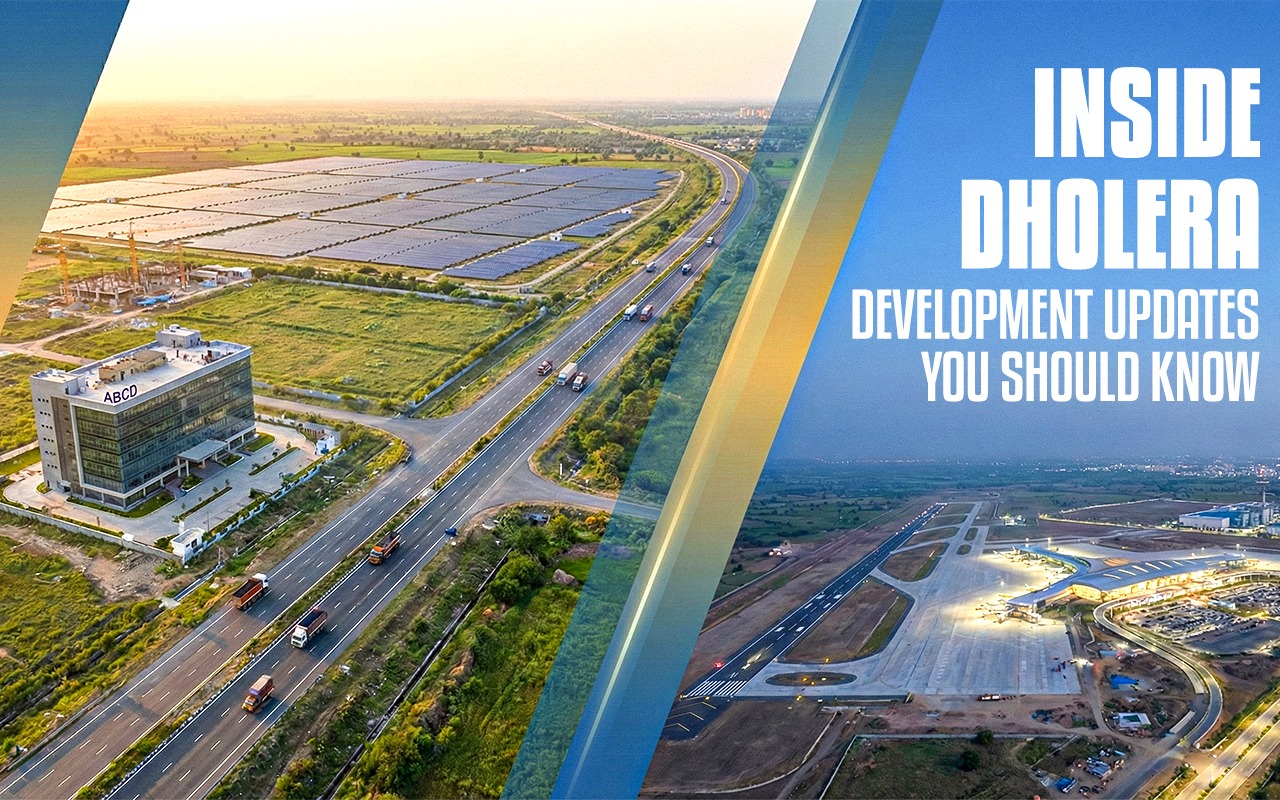
Japanese Giant Fujifilm’s decision to establish a factory in Dholera is based on the research and future development of Dholera Smart City. Dholera Special Investment Region (SIR) spans an impressive 920 square kilometers, twice the size of Delhi. It is India’s most ambitious greenfield smart city project under the Delhi-Mumbai Industrial Corridor (DMIC).
According to Forbes, Dholera ranks among the top 12 fastest-growing cities globally and is the first such city in India. The city is being developed with an estimated budget of ₹78,000 crores (approximately $10.5 billion) and is expected to house 2 million people by 2042.
The infrastructure already in place is remarkable:
- Central Spine Road: 90% of project is completed, seamless connectivity to Ahmedabad
- Dholera International Airport: Under construction with two parallel runways, expected to be operational by 2025-26
- Ahmedabad-Dholera Expressway: 95% complete, reducing travel time by 45 minutes
- Activation Area: A fully developed 22.5 square kilometer zone with roads, water, power, and drainage systems ready for immediate use
With the development happening at this tremendous rate, Dholera is ready to succeed in the semiconductor ecosystem. Hence, it is attracting several global investors to set up their factories and plants in Dholera city.
Tata Investment in Dholera: The Semiconductor Revolution
The decision by the Japanese Giant Fujifilm Electronics to plan a factory in Dholera didn’t occur in isolation. Tata Electronics is constructing India’s first AI-enabled semiconductor fabrication unit in Dholera with a staggering investment of ₹91,000 crores (~$11 billion). Tata Electronics is building a massive semiconductor facility that will produce up to 50,000 wafers each month. These wafers are crucial for making chips used in everything from power management systems and display drivers to microcontrollers and high-performance computing.
N Chandrasekaran, Chairman of Tata Sons, made the announcement at the 10th Vibrant Gujarat Global Summit back in January 2024. The facility is expected to start production by December 2025 and will create more than 20,000 jobs—both directly and indirectly—giving Dholera’s economy a major boost.
Understanding how important it is to have reliable materials suppliers close by, Fujifilm and Tata Electronics signed a partnership agreement in May 2025. Through this collaboration, Fujifilm will develop and provide semiconductor materials specifically designed for Tata Electronics’ manufacturing needs, covering everything from the initial stages of chip production right through to the final assembly processes.
This strategic alignment exemplifies why Fujifilm plans to set up a factory in Dholera, which fits perfectly into India’s broader semiconductor strategy.
India’s Future Semiconductor Market: A $100+ Billion Opportunity
As per current statistics from the India Electronics and Semiconductor Association (IESA), India’s semiconductor consumption market, valued at $52 billion in 2024-25, is projected to reach $103.4 billion by 2030, representing a robust compound annual growth rate (CAGR) of 13%. Fujifilm understands the rapid growth in the demand for semiconductors in India and in the global market; hence, with such thought and strategy, they took a chance to invest in Dholera. Some analysts, including UBS, project even faster growth, estimating the market could reach $108 billion by 2030 with a 15% CAGR.
Currently, India imports 90-95% of its semiconductor and electronics components from China, Malaysia, Taiwan, Thailand, and Singapore. This massive import dependency represents both a challenge and an extraordinary opportunity. Hence, Fujifilm will fill the gap and make India self-reliant. It even makes India a global supplier of semiconductors.
Mobile handsets, IT, and industrial applications account for nearly 70% of the semiconductor industry’s revenue and are expected to remain primary growth drivers. Additionally, automotive and industrial electronics present considerable opportunities, particularly as India’s electric vehicle market is projected to grow at over 50% CAGR through 2030.
How is the Indian Government Supporting Our Semiconductor Mission?
The Indian government has demonstrated an unwavering commitment to semiconductor self-reliance through the India Semiconductor Mission (ISM), launched in March 2022 with a financial outlay of ₹76,000 crores (~$10 billion). This comprehensive program includes:
- Semiconductor Fabs Scheme: Up to 50% fiscal support for wafer fabrication units
- Design Linked Incentive (DLI) Scheme: Financial support up to ₹15 crore per company for semiconductor design startups
- Production Linked Incentive (PLI) Scheme: For large-scale electronics manufacturing
- Compound Semiconductors & ATMP/OSAT Scheme: Support for packaging and testing facilities
The government approved Tata’s Dholera fab on February 29, 2024, under this program, alongside other major semiconductor projects. For FY 2025-26, the semiconductor budget was increased by 56% to ₹9,000 crores, signaling sustained fiscal backing.
When we consider that Fujifilm plans to expand in Dholera, we see a company responding to India’s comprehensive policy framework that makes semiconductor investment not just viable, but highly attractive.
Which Companies are Coming Next in Dholera?
Tata Electronics has set an epitome for many industries and companies. Tata attracted Fujifilm for the investment, and the trend is still on.
Here are other global companies exploring or likely to commit to Dholera:
- Linde: Linde is ready to establish a plant in Dholera to enhance industrial gas supply for semiconductor manufacturing and help Tata in every stage of the manufacturing process.
- NextGen Semiconductor: This company is raising ₹1,500 crores for expansion linked to Dholera projects
- Major tech companies: IBM, CISCO, and Wipro are evaluating opportunities in the region.
This clustering effect creates a self-reinforcing ecosystem where each new investment attracts more suppliers, service providers, and skilled talent, accelerating Dholera’s transformation into India’s premier semiconductor hub.
Employment and Skill Development
Currently, India employs approximately 220,000 semiconductor professionals, but faces a projected shortfall of 250,000 to 350,000 skilled workers by 2027 across the semiconductor value chain. The establishment of facilities like Fujifilm’s addresses this through:
- Direct employment in manufacturing, R&D, and operations
- Indirect employment in logistics, hospitality, construction, and support services
- Training partnerships with educational institutions to develop a specialized semiconductor curriculum
- Technology transfer that builds indigenous expertise in advanced materials science
India’s proactive stance is reflected in workforce development initiatives aiming to train one million skilled workers by 2030, creating a talent pipeline that will sustain long-term semiconductor industry growth.
India’s Semiconductor Vision 2030
The government’s vision extends beyond manufacturing to building an end-to-end domestic semiconductor ecosystem encompassing design, fabrication, materials, equipment, testing, and packaging. With Fujifilm and their advanced technology, India is set to become a global supplier of semiconductors.
IESA member companies have already committed over ₹1.82 lakh crores ($21 billion) in investments over the past year. The government has set ambitious local value addition targets—25 % by FY 2025-26 and 40% by 2030 — in electronics manufacturing, which will reduce import dependency while creating value-added jobs. Industry analysts predict that by 2029, India, led by Dholera, could rank among the top five semiconductor ecosystems worldwide.
Conclusion
Fujifilm’s decision to set up a factory in Dholera has symbolized India’s emergence as a critical node in the global semiconductor supply chain. By 2030, India will become self-reliant and a trusted manufacturing partner for the world’s leading technology companies.
When the nation is developing, so is Dholera Smart City; it is creating wealth opportunities for investors, developers, and professionals. What better time than today to invest in the Dholera SIR plots for residence and commerce!