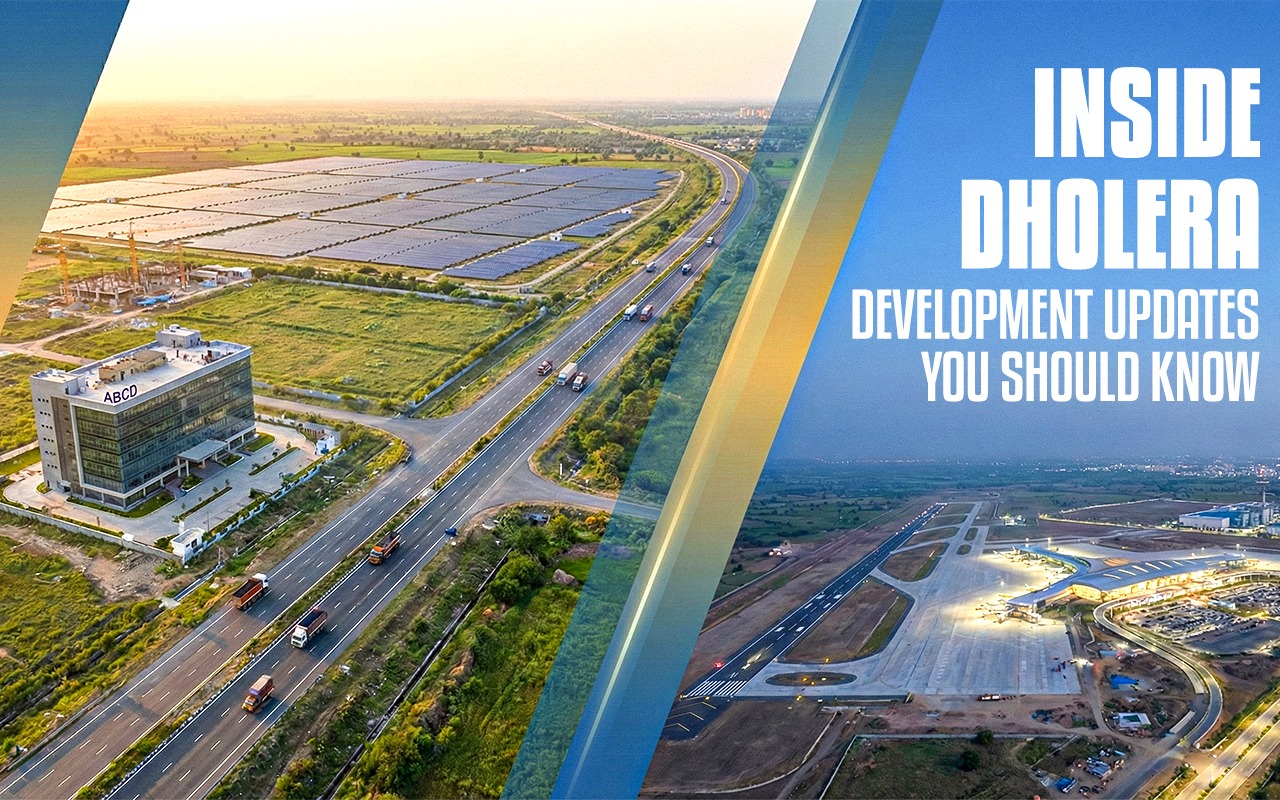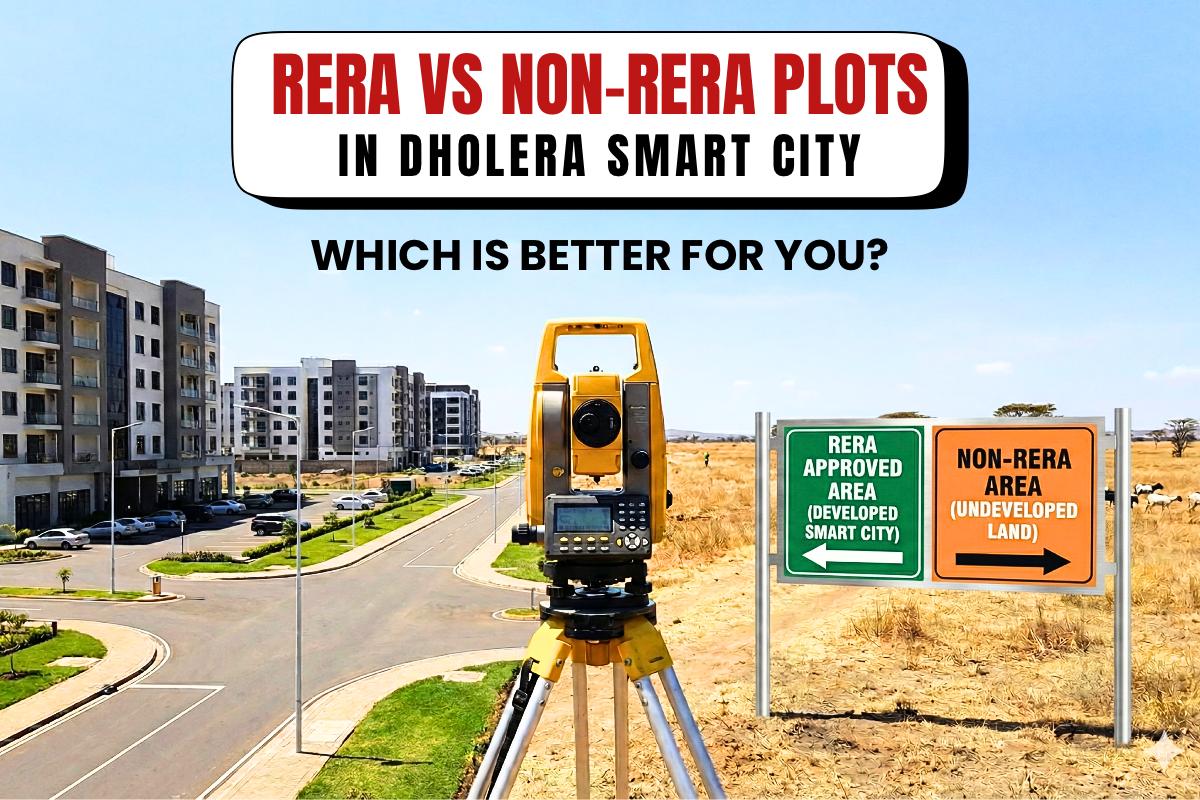
If you’re a first-time real estate investor, Dholera Smart City looks like a dream: new expressways, an international airport, industrial hubs, and planned residential zones. Naturally, the next thought is:
“Should I buy a RERA plot or a Non-RERA plot in Dholera?”
This single decision can change your risk, returns, and peace of mind.
In this guide, we’ll break down the difference between RERA and Non-RERA in simple, practical language, and then look at what makes more sense for you as a Dholera investor.
What Is RERA? (In Simple Terms)
RERA stands for Real Estate Regulatory Authority.
Under the RERA Act, any real estate project (residential or commercial) that:
- has land over 500 sq. m, or
- has more than 8 units/apartments
must be registered with RERA.
Once a project is RERA-registered, the developer has to follow strict rules about:
- project timelines and possession dates
- how customer money is used
- quality standards
- clear documentation and disclosures
- complaint redressal through the RERA authority
So when you hear “RERA plot” in Dholera, it usually means:
A plot that is part of a RERA-registered project or township, sold by a developer who has taken approvals and registered the project with the authority.
What Is a Non-RERA Plot?
A Non-RERA plot is simply a plot that does not come under any RERA-registered project.
That might mean:
- agricultural land being sold as “future plotting potential”
- village / peripheral land on the outskirts of Dholera SIR
- small plotted schemes that don’t cross the RERA thresholds
- land where the developer has chosen not to register under RERA
Non-RERA plots are not automatically illegal.
But here’s the key difference:
In RERA, the authority checks and records many things for you.
In Non-RERA, you and your lawyer must verify everything.
Why Is Everyone Talking About Dholera?
Dholera Smart City isn’t just another “new area”. It’s a greenfield smart city being built from scratch with:
- a planned international airport
- the Ahmedabad–Dholera expressway
- industrial corridors and large manufacturing zones
- smart infrastructure (roads, utilities, ICT networks)
- designated residential and commercial town planning (TP) schemes
For investors, this means two things at the same time:
- massive long-term opportunity, and
- a maze of choices: different villages, zones, developers, and both RERA and Non-RERA options.
That’s where the confusion begins.
RERA vs Non-RERA in Dholera: The First Big Fork in the Road
At some point, someone will ask you:
“Yeh plot RERA hai kya?”
And if you’re like most first-time buyers, you’ll nod and think,
“Clearly this is important, but what does it actually change for me?”
Let’s break it down like a real investor, not a brochure.
RERA Plots: Like Buying from the Official Showroom
Think of RERA plots as buying a car from an authorised showroom.
You get:
- proper receipts
- verified paperwork
- system-backed warranties
- someone official to complain to if something goes wrong
In Dholera, RERA plots are usually inside:
- approved townships
- residential schemes in or near the activation area
- projects by known developers who are planning internal roads, basic amenities, etc.
Why Investors Prefer RERA Plots
Higher safety and transparency
The developer has to declare project details, timelines, layout, and financials. If they lie or delay without reason, you can complain to the RERA authority.
Clear title and documented approvals
You’re less likely to end up buying disputed land or land that cannot legally be used the way it’s being sold.
Easier home loans
Banks and NBFCs are more comfortable funding RERA-registered projects. That matters if you plan to:
- take a loan today, or
- sell to someone who wants a loan in the future.
Better resale in a mature city
As Dholera grows, more salaried families and NRIs will want “safe”, documented properties. RERA tags help in resale.
Drawbacks of RERA Plots
Higher price per sq. yard
You’re usually closer to main infrastructure and in well-planned pockets. That premium location plus paperwork comes at a cost.
Less flexibility on refunds
Once you book, cancelling can mean deductions, strict conditions, and paperwork.
Not all land can be under RERA
Pure raw land, agricultural holdings, or very small schemes may not be covered at all. So “only RERA” as a rule can also make you miss some early-stage opportunities.
Non-RERA Plots: The Village Bazaar Gamble
Now imagine a colourful village bazaar on Dholera’s outskirts.
Prices are tempting. Stories are exciting:
“Sir, yahan expressway aa jayega… yahan metro aa jayega… ye area agla hotspot hai…”
These are your Non-RERA plots.
Why People Still Love Non-RERA Plots
Lower entry price
You can get a larger size or better bargaining power for the same budget as a small RERA plot.
Higher upside if the area develops
If city planning moves in your direction (roads, zones, industries), your land value can multiply faster than a safe, already-developed location.
More flexible deals
Many local developers or landowners offer:
- smaller booking amounts
- more negotiable payment terms
- informal refunds if they find another buyer quickly
This is attractive for early investors, small budgets, and high-risk takers.
The Real Risks in Non-RERA Plots
Paperwork mistakes can haunt you for years
Title issues, wrong survey numbers, zoning mismatch, family disputes on land…
Without RERA oversight, your only protection is proper legal due diligence.
Infrastructure can take long (or never come)
You may wait years for:
- internal roads
- drainage
- power and water connections
- any official change of land use
And if the area never gets integrated strongly into Dholera’s core plan, resale will be tough.
Refund and accountability depend on “goodwill”
If a deal goes wrong, there is no central body like RERA to complain to. You’re dealing with individuals, not a regulatory framework.
RERA vs Non-RERA in Dholera: Quick Comparison
Category: RERA Plots (Dholera) vs Non-RERA Plots (Dholera)
- Security: High – regulated, documented, grievance mechanism vs depends on your checks and seller’s honesty
- Legal Clarity: Better – title, layout, approvals more transparent vs varies – needs deep legal due diligence
- Bank Loans: Relatively easy vs often difficult or not possible
- Price: Higher vs lower
- Refunds/Cancellation: Strict as per agreement and law vs informal / case-by-case
- Growth Potential: Steady, predictable vs high if area develops, low if it doesn’t
- Risk Level: Lower vs higher
- Ideal Buyer: Families, NRIs, safety-first investors vs early-stage investors, small budgets, high-risk takers
Who Should Buy a RERA Plot in Dholera?
Choose RERA plots if:
- you’re planning a home or a safe long-term asset
- you value peace of mind more than squeezing the last rupee of return
- you want the comfort of regulation, documentation and easier loan/resale possibilities
- you’re buying for parents, spouse, or children and want minimum headaches
You may pay more initially, but you reduce your “mental EMIs” – stress, fear, and sleepless nights.
Who Should Buy a Non-RERA Plot in Dholera?
Non-RERA might suit you if:
- you’re comfortable with risk and waiting
- you’re okay doing serious homework – site visits, revenue record checks, multiple lawyer opinions
- your goal is higher percentage returns rather than immediate construction
- you can hold for 7–10 years without needing to sell
The key mantra here is:
“High return ka sapna, high homework ke bina mat dekhna.”
Practical Checklist Before Buying Any Plot in Dholera
Imagine your wisest friend sitting next to you. This is what they’d insist on:
Walk on the land
Don’t just see photos and layout maps. Visit the exact location in Dholera, see approach roads, nearby development, and ground reality.
Hire a real property lawyer
Not a friend, not “builder’s advocate”, not “uncle in property line”. A proper lawyer who will:
- verify title and previous transactions
- check for litigation
- confirm land use and zoning
- read your sale agreement line by line
Ask straight questions
- Who is the original landowner?
- Any court case on this survey number?
- Which authority has approved this layout or zone?
- Is the project RERA registered? If not, why?
Check the future, not just the brochure
Look at:
- proximity to expressway, airport road, TP roads
- distance from activation area or key industrial zones
- announced or notified plans, not just rumours
Check the developer’s track record
- What have they delivered before?
- Are there existing customers you can talk to?
- Do they have proper office, staff, and systems?
Making the Choice: RERA vs Non-RERA Is Personal
There is no one universal “right” answer.
If your heart calms down when paperwork is airtight and government-backed, RERA is better for you.
If you enjoy spotting early opportunities, can handle uncertainty, and understand risk, selected Non-RERA, after full legal checks, might make sense.
The worst mistake is not RERA or Non-RERA.
The worst mistake is rushing into either without understanding what you’re buying.
Final Thoughts: Dholera Rewards the Prepared
Dholera Smart City is a long-term story.
Whether you choose a RERA township plot near key infrastructure or a Non-RERA early-stage parcel in a future-facing zone, the city will reward:
- – patience
- – due diligence
- – and the ability to say “no” to deals that don’t feel right
Your investment isn’t just about owning land.
It’s about owning a clean story you can proudly tell your family ten years from now:
“I didn’t just gamble. I learned, I verified, and then I invested.”
That mindset alone puts you ahead of most buyers in any emerging city.